

Cloud Enterprise Resource Planning (ERP) has become the backbone of modern manufacturing operations — enabling agility, real-time analytics, supply chain resilience, and cost optimization at scale. As CTOs and Operations Managers evaluate high-value enterprise solutions, selecting the right cloud ERP impacts profitability, compliance, and future-proofing.
This guide:
Compares leading cloud ERP systems
Defines evaluation criteria with manufacturing-specific priorities
Breaks down ROI drivers
Provides deployment, integration, security, and TCO insights
Answers key vendor and architecture questions
Executive Summary
Cloud ERP adoption in manufacturing is no longer optional. Between 2024–2026, manufacturers accelerated cloud migrations, driven by:
Need for real‐time supply chain visibility
Digital transformation budgets prioritizing AI/ML analytics
Dispersed production footprints demanding global collaboration
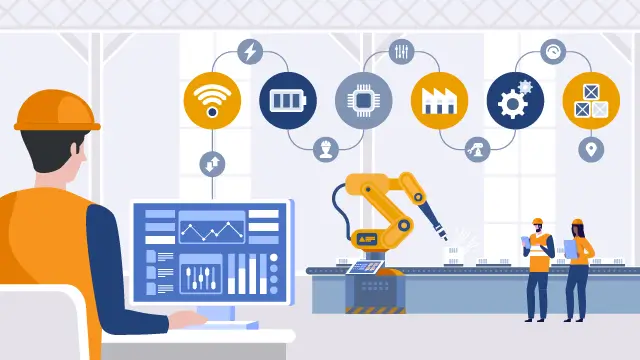
Key trends include:
Hybrid cloud architectures dominating >70% of deployments (on-premise integration + SaaS ERP
Native AI for predictive maintenance and demand forecasting
API-first platforms enabling composable manufacturing suites
This guide assumes a manufacturing landscape with robotics, MES/SCADA integration, multiple sites, and regulatory compliance (e.g., FDA, ISO).
Top Cloud ERP Systems for Manufacturing (2026)
Below is a side-by-side comparison of the most widely evaluated cloud ERP platforms for manufacturing operations.
| Feature / Vendor | SAP S/4HANA Cloud | Oracle Fusion Cloud ERP | Microsoft Dynamics 365 | Infor CloudSuite Industrial (SyteLine) | IFS Cloud |
| Deployment Model | SaaS / Hybrid | SaaS / Hybrid | SaaS / Hybrid | SaaS | SaaS |
| MES/Shop Floor Integration | Strong (SAP ME/PP-DS) | Strong | Good | Excellent | Strong |
| Supply Chain Planning | Real-time, embedded | Advanced | Good | Mid-tier | Strong |
| AI/ML Analytics | Embedded predictive | Embedded analytics | Power BI integration | Add-ons | Native AI modules |
| Global Financials | Enterprise scale | Enterprise scale | Mid-enterprise | SMB to Enterprise | Mid-enterprise |
| Customizability | High (ABAP extensibility) | High | High | High | High |
| Cloud-Native Scalability | Excellent | Excellent | Excellent | Good | Good |
| Industry Verticals | Automotive, Pharma, High Tech | Automotive, Aerospace, CPG | Discrete, Process | Discrete | Aerospace, Defense, Energy |
| Licensing Complexity | High | High | Medium | Medium | Medium |
| Best Fit Scenario | Large global enterprises | Large enterprises | Mid-large manufacturers | SMB to mid-market | Projects & service-oriented manufacturers |
Why Cloud ERP Matters for Manufacturing
Cloud ERP systems unify core business processes — finance, production, supply chain, quality, procurement, and HR — into a single digital backbone. For manufacturing organizations, cloud ERP offers:
1. Real-Time Operational Insight
Modern manufacturing demands visibility across plants, warehouses, and supply partners. Cloud ERP provides real-time KPIs, enabling:
Instant cycle time and throughput reporting
Predictive stock replenishment
Dashboards for OEE, yield, and quality metrics
2. Scalability & Global Execution
Cloud ERP eliminates on-prem bottlenecks, enabling:
Elastic compute for peak demand scenarios
Geographic data residency and multi-currency support
Standardized templates across sites
3. Reduced IT Overhead
With SaaS delivery:
Upgrades are vendor-managed
Infrastructure costs drop
Patching and compliance are streamlined
4. Integrations with IIoT & AI
Cloud architecture enables:
APIs to connect MES, SCADA, PLCs
ML forecasting for demand/supply optimization
Predictive maintenance using sensor telemetry
What to Look for in a Manufacturing Cloud ERP
Selecting the right ERP means defining functional and architectural criteria. Below is a manufacturing-centric checklist:
A. Core Manufacturing Functionality
Discrete vs Process vs Mixed Mode
Production Scheduling & Finite Capacity Planning
Shop Floor Data Collection (MES)
Quality Management (QMS)
Bill of Materials (BOM), Routing, Work Templates
B. Supply Chain & Planning
Demand Forecasting Tools
Supply Network Optimization
Advanced Planning & Scheduling (APS)
Vendor Collaboration Portals
C. Integration & APIs
RESTful APIs
Pre-built connectors for:
MES/SCADA/IoT platforms
PLM systems (e.g., Siemens Teamcenter, PTC Windchill)
CRM (e.g., Salesforce)
Event streaming (Kafka, MQTT) for real-time telemetry
D. Technology Architecture
Microservices & containerization
Support for multi-tenant SaaS
Edge computing support for low latency shop-floor operations
Data fabric for unified analytics
E. Analytics & AI
Embedded analytics dashboards
ML-based predictions for maintenance and demand
Natural language reporting (chat interfaces to KPIs)
Self-service BI tools
F. Security & Compliance
Identity and Access Management (IAM)
Encryption at rest and in transit
Role-based access control (RBAC)
Audit trails and compliance reporting
Regulatory compliance templates (ISO 9001, FDA 21 CFR Part 11)
Technical Evaluation Rubric
Use this weighted scoring model to evaluate ERP vendors based on your organization’s priorities:
| Category | Weight | Notes |
| Core Manufacturing Capability | 25% | Must-have for discrete/process operations |
| SCM & Planning | 20% | High leverage for optimization |
| Integration Flexibility | 15% | API/connector ecosystem |
| Analytics & AI | 15% | Insights and automation |
| Security & Compliance | 15% | Enterprise risk reduction |
| TCO & Licensing | 10% | Cost effectiveness and scalability |
Total possible score = 100 points
Deployment Models: SaaS vs Hybrid vs Private Cloud
Manufacturers often choose between different cloud deployment models:
SaaS (Multi-tenant): Best for rapid innovation, reduced patching, and lower upfront cost.
Hybrid (Cloud + On-Prem MES/SCADA): Maintains sensitive manufacturing execution systems close to hardware with cloud orchestration.
Private Cloud: For highly regulated environments with bespoke integrations.
Key considerations:
SaaS reduces IT operational burden but may limit deep customization.
Hybrid suits organizations with existing MES/automation investments.
Private cloud can provide compliance isolation but increases cost.
ROI Breakdown: How Cloud ERP Drives Value
Investing in a cloud ERP is a major capital decision. Here’s a data-driven ROI model that captures both quantitative and qualitative impacts:
1. Cost Savings
| Category | Typical Benefit |
| Infrastructure | 20–40% reduction in hosting and maintenance |
| IT Support | 25–35% fewer support tickets |
| Upgrade Costs | 60–90% reduction (vendor managed) |
| Licensing Flexibility | Opex aligned pay-as-you-go |
Example Calculation (5-year horizon):
Legacy on-prem hardware: $1.2M
Maintenance & upgrades: $800K
Cloud ERP subscription + integration: $1.4M
→ Net savings: ~$600K in reduced TCO
2. Productivity Gains
Cloud ERP eliminates data silos and automates manual processes:
Shop floor scheduling automation → up to 30% faster planning cycles
Integrated quality workflows → 20% fewer defects
Unified financials → 15% reduction in close cycles
These gains translate to:
Higher throughput
Better OTIF (On-Time In-Full) delivery
Reduced rework and scrap
3. Working Capital Optimization
With real-time visibility:
Inventory levels can drop 10–20%
Safety stock optimization reduces tied-up capital
Demand forecasting reduces stockouts and expedited freight costs
Example:
A $500M manufacturer with 20% inventory reduction = $20M freed cash flow
4. Risk & Compliance Mitigation
Cloud ERP systems:
Centralize audit trails
Standardize compliance workflows
Provide built-in regulatory reporting
Cost avoidance from compliance breaches and unplanned outages is substantial — often exceeding 5–10% of IT budgets in risk savings.
Key Questions CTOs Must Ask Vendors
When engaging ERP vendors, ask:
- What manufacturing templates and industry accelerators do you provide?
- How do you handle MES integration — out-of-the-box or via partners?
- What’s your API strategy and ecosystem partners?
- How is data partitioned and secured in your cloud?
- What are SLA guarantees for uptime and performance?
- How do upgrades impact customizations?
- What are benchmarks for time-to-value deployment in manufacturing?
Integration Case Studies
Case: Automotive Tier 1 Manufacturer
Requirements: Real-time supplier quality and JIT scheduling
Cloud ERP: SAP S/4HANA Cloud + SAP ME integration
Outcome: 40% reduction in schedule variance, improved supplier compliance
Case: Electronics OEM
Requirements: High mix/low volume, global sites
Cloud ERP: Oracle Fusion Cloud + embedded AI forecasting
Outcome: 18% reduction in excess inventory and improved forecast accuracy
Case: Industrial Equipment Maker
Requirements: MES + ERP convergence
Cloud ERP: Microsoft Dynamics 365 + third-party MES via Azure IoT
Outcome: 25% reduction in unplanned downtime
Total Cost of Ownership (TCO) Considerations
| Cost Category | SaaS ERP | On-Prem |
| Initial Licensing | Low | Very High |
| Hardware & Infrastructure | $0 | Very High |
| Maintenance & Upgrades | Included | High |
| Customization Costs | Moderate | Very High |
| Integration Middleware | Moderate | High |
Important: TCO must include integration layers, data migration, training, change management, and ongoing support.
Security & Compliance: Manufacturing Focus
Manufacturers face cyber risks from:
Connected OT environmentsThird-party supply integrations
Multi-site operations
Cloud ERP must support:
Zero Trust
IAM with MFA
SIEM integration
Encryption & key management
Data residency controls
Audit logs, segmentation, and vendor attestations (SOC 2, ISO 27001) are table stakes.
Deployment Best Practices
Define a phased rollout: Start with finance and supply chain, then add MES/SCADA.
Establish a Center of Excellence (CoE): Cross-functional governance.
Use agile deployment cycles: Ship incremental value.
Invest in integration management: Real-time data pipelines and APIs.
Train end users thoroughly: Change management equals adoption.
Conclusion: Strategic Cloud ERP Selection
Selecting a cloud ERP for manufacturing is a strategic investment with operational and financial impact across the enterprise lifecycle. CTOs and Operations Managers should:
- Evaluate fit against manufacturing needs
- Use data and weighted scoring
- Prioritize integration, AI, and automation
- Model ROI with real business scenarios
- Validate security and scalability
Leading cloud ERPs — from SAP, Oracle, Microsoft, Infor, and IFS — offer strong foundations, but the right selection depends on your:
Product mix
Global footprint
IT landscape
Growth strategy
This guide provides the frameworks and benchmarks you need to drive a confident, data-driven decision.