Snap’s first consumer AR glasses, Specs, debut at $2,195 with standalone chips and AI. Despite impressive tech challenging Meta, steep pricing and bulky frames spark immediate adoption doubts.
Unlock 5-star luxury travel on a budget this November! Discover early Black Friday hotel discounts, business class points hacks, and luxury travel tips for Q4.
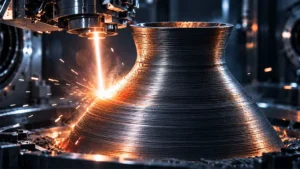
Tungsten 3D printing breakthroughs—AI-designed alloys, grain boundary engineering, and electron beam fusion—now enable crack-free parts for aerospace, hypersonic vehicles, and fusion reactors, unlocking extreme-environment applications.
Circular financing between Nvidia and AI firms, plus Wall Street’s $500B securitized debt pipeline, fuels bubble warnings, but real demand and revenue growth suggest the boom isn’t over yet.
ByteDance is racing to train a 10-trillion-parameter AI model in 2026, betting massive compute and talent against U.S. rivals, despite scaling doubts, export controls, and uncertain financial returns.
The 2026 Nobel Prize honors neutrino astronomy, using IceCube to detect ghost particles that pass through matter, enabling multi-messenger observations beyond light and transforming our view of the universe.
In 2026, hospitals and schools face record ransomware attacks because they hold sensitive data, cannot tolerate downtime, and often lack strong defenses, while AI accelerates threats, making them attractive targets.
In 2026, anonymity is not dead but eroding. VPNs fail against traffic analysis; age verification and encryption backdoors expand surveillance. Tor, mixnets, layered defenses still remain necessary to stay invisible.