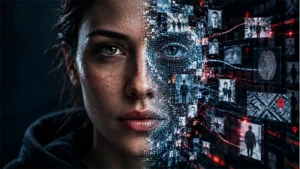

When most people hear “generative AI,” they still think of a text-based chatbot—a tool for answering emails or writing code. But that narrow view misses a far bigger story. Today, generative AI is quietly transforming the creative industries, from film studios and advertising agencies to music production and fashion design. It is no longer just a helper; it has become a collaborator, a source of inspiration, and in some cases, a disruptor.
From Text Generation to Multi-Modal Creation
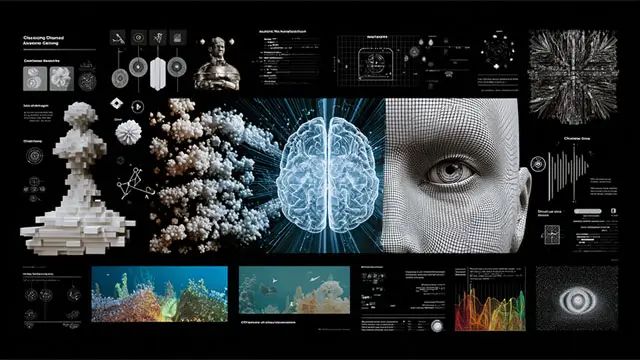
The shift began with large language models, but the real revolution lies in multi-modal AI—systems that can generate images, video, 3D assets, and sound. Tools like Midjourney, Sora, and Adobe Firefly allow creators to produce high-quality visuals from simple text prompts. In the film industry, AI is being used for pre-visualization, concept art, and even de-aging actors. Meanwhile, music producers use AI to generate unique samples, and game developers rely on procedural content generation to build vast, immersive worlds.
This expansion beyond text means creative professionals can now prototype ideas in hours instead of weeks. For independent creators, it lowers the barrier to entry, enabling a single person to produce work that once required a full team.
Transforming Workflows, Not Just Output
Generative AI is reshaping how creative work gets done. In advertising, agencies use AI to rapidly iterate campaign concepts and generate personalized ad copy at scale. In publishing, authors experiment with AI-assisted brainstorming to overcome writer’s block. Fashion designers feed mood boards into generative models to explore new patterns and silhouettes.
However, this shift is not without tension. Many creatives worry about copyright infringement, as AI models are trained on vast datasets often scraped without consent. There are also concerns about job displacement, especially in fields like illustration, voice acting, and copywriting. Yet the emerging consensus is not that AI will replace human creativity, but that it will redefine it. The most successful professionals are those who learn to collaborate with AI—using it to handle repetitive tasks while focusing on high-level storytelling, emotional nuance, and strategic direction.
New Business Models and Ethical Considerations
The rise of generative AI has also spawned entirely new business models. Platforms now offer AI-as-a-service for custom content generation, and marketplaces for AI-generated assets are growing rapidly. At the same time, regulators are catching up. The European Union’s AI Act, along with ongoing lawsuits in the U.S., is beginning to set boundaries around training data transparency and the use of AI-generated content.
For creative industries, the key will be balancing innovation with ethical responsibility. Companies that adopt AI transparently—by disclosing AI involvement, compensating artists for training data, and using AI to augment rather than replace—will likely lead the way.
The Future: Human-AI Co-Creation
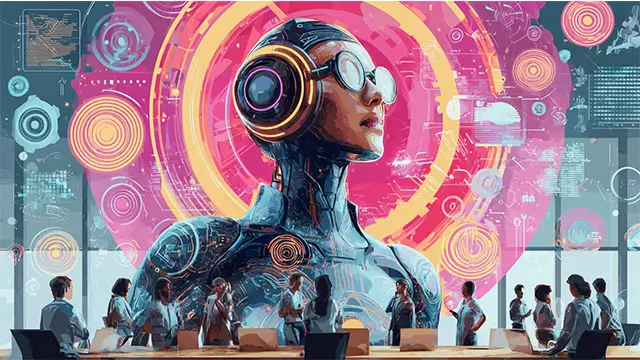
Looking ahead, generative AI will become an even deeper part of the creative process. We are moving toward real-time collaborative AI, where creators can interact with models as they work, similar to having an intelligent assistant that understands artistic intent. The distinction between “human-made” and “AI-generated” may blur, but the value of human originality, cultural context, and emotional resonance will remain irreplaceable.
In the end, generative AI is not just a better chatbot—it is a fundamental shift in how we create. For the creative industries, the question is no longer whether to adopt AI, but how to do so in a way that amplifies human imagination rather than diminishing it.