

Core Takeaway: CRISPR 2.0 represents a new generation of gene-editing tools that go beyond the original CRISPR-Cas9. Techniques like base editing and prime editing are making the process faster, cheaper, and far more precise, dramatically expanding the potential to cure genetic diseases while also raising fresh ethical questions.
The Limitations of First-Generation CRISPR
When CRISPR-Cas9 first emerged, it revolutionized biology by allowing scientists to cut DNA at specific locations. However, it relies on creating a double-strand break in the DNA helix, which the cell must repair. This repair process is error-prone and can lead to unintended insertions, deletions, or even large-scale chromosomal rearrangements. While still powerful, the original CRISPR system often lacked the precision required for therapeutic applications where a single incorrect DNA letter can cause disease.
A New Era of Precision: Base and Prime Editing
The leap to CRISPR 2.0 began with base editing, pioneered by Dr. David Liu’s lab at the Broad Institute. Published in Nature in 2016, base editors chemically convert one DNA base into another—for example, changing a C•G pair to a T•A pair—without cutting the double helix. This avoids the unpredictable repair response and dramatically reduces the formation of unwanted byproducts. A subsequent 2020 study in Nature Biotechnology demonstrated the therapeutic potential of base editing by correcting the sickle cell disease mutation in mice with efficiencies high enough to reverse disease symptoms.
Even more versatile is prime editing, also developed by Liu’s team and described in a 2019 Nature paper. Prime editing uses a modified Cas9 nickase fused to a reverse transcriptase, along with a prime editing guide RNA (pegRNA) that both specifies the target site and encodes the desired edit. It can perform targeted insertions, deletions, and all 12 possible base-to-base conversions, effectively functioning as a “search and replace” tool for DNA. A 2023 study in Nature Biotechnology showed that improved prime editors can correct mutations in human cells with efficiencies exceeding 80% for some disease-relevant targets, while maintaining extremely low off-target profiles.
Faster and Cheaper: The Democratization of Gene Editing
New CRISPR enzymes are also accelerating the process. Researchers have discovered smaller Cas proteins, such as Cas12f and CasΦ, that are easier to package into viral vectors for delivery into cells. Simultaneously, the cost of synthesizing guide RNAs and sequencing DNA continues to fall, partly driven by improvements in next-generation sequencing and automation. According to the World Health Organization, this convergence is making gene-editing research accessible to laboratories around the globe, not just well-funded academic centers.
Real-World Impact: The First Approved CRISPR Therapies
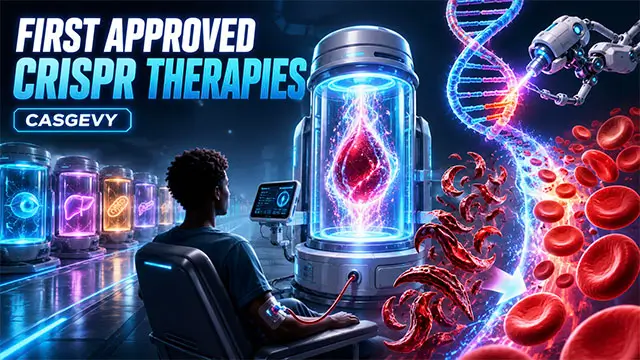
The impact of CRISPR 2.0 is already reaching patients. In late 2023, the U.S. FDA approved Casgevy (exagamglogene autotemcel), a CRISPR-based therapy for sickle cell disease and transfusion-dependent beta-thalassemia. Developed by Vertex Pharmaceuticals and CRISPR Therapeutics, Casgevy uses a version of CRISPR-Cas9 to reactivate fetal hemoglobin, but its success paves the way for more precise second-generation editors currently in clinical trials. As of 2026, multiple base-editing and prime-editing therapies are in early-stage trials for conditions ranging from inherited blindness to metabolic disorders.
Ethical Considerations Remain
The increased precision does not eliminate ethical concerns. The World Health Organization’s 2021 guidelines on human genome editing stress the need for robust oversight, especially regarding germline edits that can be passed to future generations. Additionally, ensuring equitable access to these transformative—and expensive—therapies is a pressing global challenge. CRISPR 2.0 may be faster, cheaper, and more precise, but society must still grapple with how and when to use it.
Conclusion
CRISPR 2.0 is transforming gene editing from a blunt instrument into a finely tuned set of molecular tools. With base editing, prime editing, and improved delivery systems, the promise of curing genetic diseases has never felt closer. As the technology accelerates, the key will be matching scientific speed with ethical foresight.