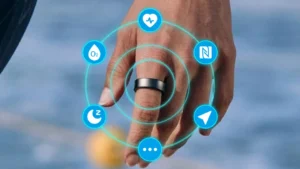

Your smartwatch buzzes. Another notification: “Your heart rate is elevated.” “Your sleep score was 72—below average.” “Stress detected. Try breathing exercises.”
What was supposed to make you healthier is starting to feel like a second job.
If this sounds familiar, you’re not alone. Nearly 45% of Americans regularly wear a smartwatch or fitness tracker, including 70% of Gen Z and more than half of millennials.
These devices promise insights, accountability, and optimization. But for many users, they deliver something else entirely: anxiety, obsession, and a growing distrust of their own bodies.
Welcome to the paradox of the quantified self. In 2026, as AI transforms wearables from simple step counters into sophisticated health predictors, the question isn’t whether these devices work—it’s whether they’re working for you, or against you.
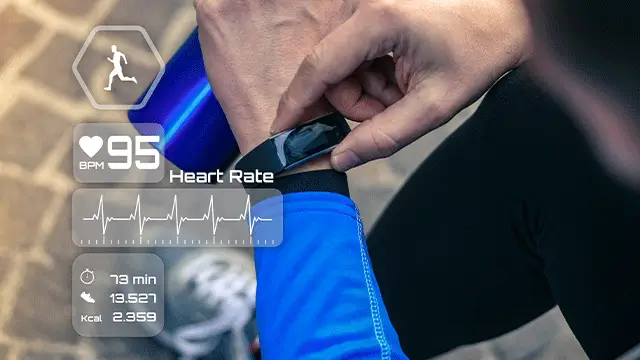
The Rise of “Orthosomnia” and Data Anxiety
When Gloria Mark, a University of California informatics professor, bought a sleep-tracking ring six years ago, she was genuinely curious about her rest patterns. But curiosity quickly curdled into dependence.
“Before I used the tracker, I relied on my body’s signals to determine if I felt refreshed and alert or sluggish and drowsy,” she writes. “But once I got the ring, the first thing I did when I woke up was to check my sleep score. The aggregate score on a scale of 0 to 100 shaped my mood for the day”.
The problem? The data didn’t always match how she felt. A score of 70 might coincide with feeling sharp and energetic, while a 92 sometimes meant she was exhausted. Yet she gave the tracker more weight than her own body. There’s actually a term for this: orthosomnia—an unhealthy preoccupation with perfecting sleep through technology, which can ironically lead to worse sleep quality.
This phenomenon extends far beyond sleep tracking. Users report anxiety over heart rate variability, stress scores, recovery metrics, and even the number of times they stand up each hour. In China, where “smart wellness” has become a cultural phenomenon, one user told a reporter: “My smartwatch shows that I might have palpitations or atrial fibrillation at night. I searched online and found it’s quite a serious issue. I feel very anxious and wake up every day like checking exam scores”.
The Data Deluge: When More Information Backfires
The irony is profound: technologies designed to empower us are increasingly overwhelming us. A 2025 article in npj Digital Medicine describes this as the “digital health information dilemma”—where continuous streams of metrics and nudges impose significant cognitive and emotional burdens.
Terms like “cyberchondria” have emerged to describe health anxiety fueled by excessive digital self-tracking. Users misinterpret normal physiological fluctuations as warning signs. They become preoccupied with targets and thresholds, transforming flexible health management into rigid, distressing preoccupations with metrics.
This isn’t just uncomfortable—it’s counterproductive. Research suggests that information overload from digital health tools can lead to user fatigue, skepticism, reduced engagement, and ultimately, abandonment of both the technology and the healthy behaviors it was designed to encourage.
Is the Data Even Accurate?
Another layer of anxiety comes from uncertainty about the data itself. When your watch says you’re “stressed” but you feel fine—or vice versa—who do you believe?
Recent research highlights this disconnect. A study from the University of Marburg and Leiden University found no correlation between stress levels shown on Garmin watches and participants’ self-reported feelings of stress. Headlines jumped on this, declaring smartwatches “useless” for stress tracking.
But as wearable tech reviewers point out, there’s crucial context missing: the “stress” measured by wearables is physiological stress—nervous system activation detectable through heart rate and movement—not emotional stress. Exercise, excitement, arousal, and even fighting off a cold can all register as “stress” in your app, even when you feel perfectly calm.
“Smartwatch heart rate measurements are easily influenced by various factors, ultimately leading to discrepancies between ‘feeling’ and ‘data’,” explains Dr. Lu Wei, a Beijing-based physician. These devices are powerful tools, but they’re not mind-readers—and treating them as such sets users up for unnecessary worry.
The AI Revolution: Personalization or Information Overload?
As artificial intelligence integrates deeper into wearables, the landscape is shifting. AI algorithms can now process vast amounts of sensor data in real-time, identifying patterns associated with everything from depression to substance use cravings.
Researchers at MIT and Harvard are developing AI models that correlate physiological features—electrodermal activity, heart rate variability, sleep patterns—with clinician-rated depression severity. The goal: create automated detection systems that could notify patients and doctors of worsening symptoms before they become crises.
This is genuinely promising. But it also raises profound questions. As one technology ethics scholar notes, “It is rare for corporations to be transparent about how data is being interpreted, and the way these wearables work means that deeply personal information is being accessed by corporations”.
Stringent measures like robust encryption and data anonymization are necessary, but they don’t address the immediate psychological impact on users. When AI flags potential issues, who helps users interpret them? When does early detection cross into unnecessary alarm?
Who Experiences Wearable Anxiety Most?
Research suggests certain populations may be more vulnerable to wearable-induced anxiety. A 2026 study on pregnant women found that those with higher pregnancy-related anxiety showed significantly greater willingness to use smart devices—but also potentially greater susceptibility to the stress those devices might cause -7.
The authors note that “constant monitoring might represent an additional source of anxiety and stress, reinforcing reassurance-seeking behavior and potentially worsening symptoms of pathological anxiety”.
For individuals already prone to anxiety, wearables can become what psychiatrist Jiang Sisi calls an anxiety “superimposition”—providing endless “material” for worry. The device isn’t necessarily the cause, but it becomes a constant trigger, feeding a cycle of checking, worrying, and checking again.
How to Break Free: Strategies for Healthy Wearable Use
So, should you throw your smartwatch in a drawer? Not necessarily. Experts agree these devices offer genuine benefits—but only when used mindfully. Here’s how to navigate the data deluge without drowning:
1. Treat Data as Input, Not Authority
Dr. Lu Wei advises users to view health data as “reference, not absolute standard.” If your sleep score is low but you feel rested, trust your body. If your stress reading is high but you’re relaxed, consider whether you just exercised or drank coffee. “Don’t obsess over single measurements; observe dynamic trends” over weeks, not days.
2. Delay Checking
Gloria Mark now checks her sleep tracker at the end of the day rather than first thing in the morning. “I treat the data as just one input,” she says. “It is no longer the authority, the centerpiece, and I’m now listening more closely to my body’s signals than to my app’s data”.
3. Adjust Your Notifications
Kate Miskevics, a therapist specializing in anxiety, recommends adjusting notification settings to reduce distractions. “We know that consciously choosing to spend time away from our phones and having technology breaks allows us to be more mindful and healthier, mentally”.
4. Create Tech-Free Zones
Designate times when you’re not wearing your device—during meals, the first hour after waking, or before bed. This trains your brain that you can exist without constant feedback.
5. Understand What You’re Measuring
Knowing the difference between physiological and emotional stress can prevent misinterpretation. When your WHOOP app shows high “stress,” it might reflect your workout, not your anxiety level.
6. If It’s Making You Miserable, Take a Break
This seems obvious, but many users feel guilty pausing their tracking streaks. If checking your data frequently leads to “tension, anxiety,” consider reducing monitoring frequency or temporarily disabling the device.
The Future: AI Guardians or Just More Noise?
Researchers are exploring whether AI itself might solve the problem it helped create. The concept of “AI health companions”—intelligent mediators that filter, contextualize, and personalize health information—is gaining traction.
These systems could theoretically surface only what matters, suppress noise, and translate complex data streams into plain-language guidance. Google’s Personal Health LLM has already demonstrated the ability to generate sleep and fitness recommendations rated comparable to human experts.
The Bottom Line
The healthiest relationship with wearable technology is one where you remain in charge. Use the data. Learn from the trends. But never forget that the most sophisticated health monitor you’ll ever own is already inside you.
The next time your watch buzzes with a notification, pause before you react. Ask yourself: Is this information helping me, or just stressing me out? The answer might be the most valuable data point of all.