
Can AI truly write, paint, and compose like humans? Explore the capabilities and limits of generative AI in creative fields — and what it means for the future of art.
The Rise of the Creative Machine
Not long ago, creativity was considered uniquely human. Machines could calculate, but they couldn’t craft a poem, compose a symphony, or paint a sunset. Then came generative AI. Today, models like ChatGPT, DALL·E 3, Midjourney, and Suno can produce text, images, and music that often rival human-made work. This raises a profound question: Can machines truly write, paint, and compose like humans? The answer is both impressive and nuanced — yes, in terms of output quality, but no, when it comes to meaning and intentionality.
What AI Can Do: Impressive Technical Imitation
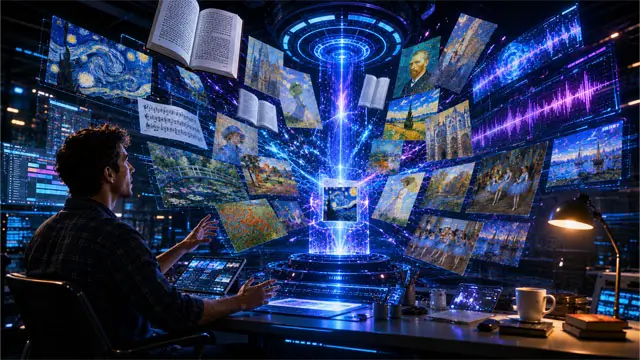
AI excels at learning patterns from massive datasets. Trained on millions of books, paintings, and songs, generative models produce original outputs that follow stylistic rules, grammar, rhythm, and composition.
• Writing: AI can draft blog posts, poems, scripts, and even academic essays. In blind tests, readers often cannot distinguish AI-generated fiction from human-written work.
• Painting: Tools like Midjourney and DALL·E create stunning, high-resolution images in any style — from Renaissance oil paintings to cyberpunk concept art.
• Music: Suno and Udio generate full songs with vocals, instruments, and lyrics in specific genres, complete with verse-chorus structure.
AI can also remix, iterate, and personalize at scale — something no human can do. An artist might paint one masterpiece in a week; AI can generate thousands of variations in seconds.
Where AI Falls Short: The Human Spark
Despite technical prowess, AI lacks qualities central to human creativity:
1. Intentionality and meaning — Humans create to express emotion, tell stories, process trauma, or challenge society. AI has no lived experience, beliefs, or desires. It mimics emotion without feeling it.
2. Original breakthroughs — AI remixes what already exists. Truly revolutionary art — Picasso’s cubism, Beethoven’s late quartets, Joyce’s stream of consciousness — breaks conventions. AI is trained on conventions.
3. Context and soul — A painting by Frida Kahlo reflects her pain. A song by Leonard Cohen carries decades of longing. AI productions are hollow at their core, however beautiful.
4. Imperfection and risk — Human creativity thrives on happy accidents, vulnerability, and breaking rules. AI optimizes for pleasing patterns and safe averages.
Can AI Be a Creative Partner?
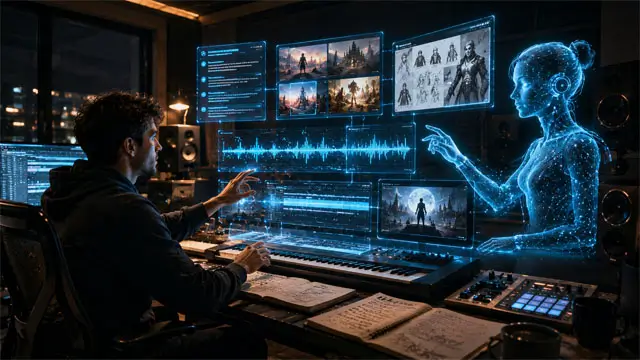
The most compelling answer isn’t replacement — but collaboration. Many artists, writers, and musicians now use AI as a tool, not a substitute. A novelist might ask ChatGPT to brainstorm plot twists. A painter might generate reference images in minutes. A composer might feed AI a melody and explore variations. This partnership amplifies human creativity, removing drudgery and sparking unexpected directions.
The Verdict: Imitation Without Soul
So, can machines truly write, paint, and compose like humans? Technically, yes — they can produce indistinguishable outputs. Creatively, no — they lack consciousness, intentionality, and lived experience. AI is a mirror reflecting our cultural dataset, not a mind with something to say. The future of creativity isn’t human vs. machine. It’s human with machine — using AI to handle craft while we focus on meaning.