

Learn how to use ChatGPT for journaling, reflection, and mental clarity. Discover powerful prompts, research-backed benefits, and practical tips for everyday use.
From Blank Page to Insightful Conversation
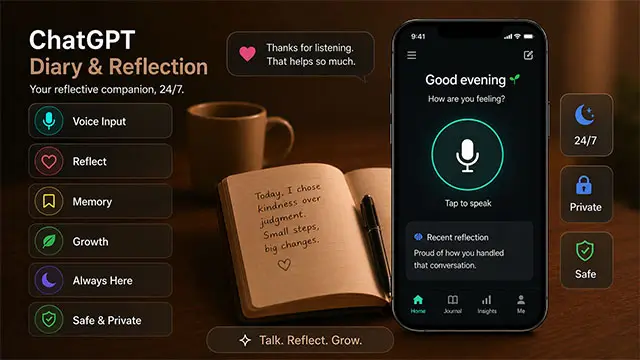
Traditional journaling is powerful, but staring at a blank page can feel overwhelming. ChatGPT offers a different approach: an interactive journaling partner that asks thoughtful questions, uncovers hidden patterns, and helps you process emotions in real time. With voice input and memory features, it’s like having a reflective companion available 24/7. Research now shows that AI-assisted journaling can meaningfully improve mental health outcomes and emotional well-being.
How ChatGPT Enhances Your Journaling Practice
1. Brain Dump and Reflection
Start by voice-typing everything on your mind — tasks, worries, random thoughts. Then prompt ChatGPT: “Help me reflect on today. What went well and what felt hard? Ask me 3 questions to go deeper.” The AI transforms mental clutter into structured insight.
2. Pattern Recognition Over Time
ChatGPT’s memory feature can track recurring themes in your entries. Ask: “What themes have come up in my last few journal entries? Do you notice any changes in my tone or mood this week?” This turns scattered entries into meaningful self-awareness.
3. Structured Reflection Prompts
Powerful prompts push beyond surface-level reflection. Try: “I am going to describe three situations where I felt overwhelmed. Identify the common patterns across all three — in my behavior, my emotional response, and the circumstances.” This technique surfaces hidden dynamics you’re too close to see.
The Research: Does It Actually Work?
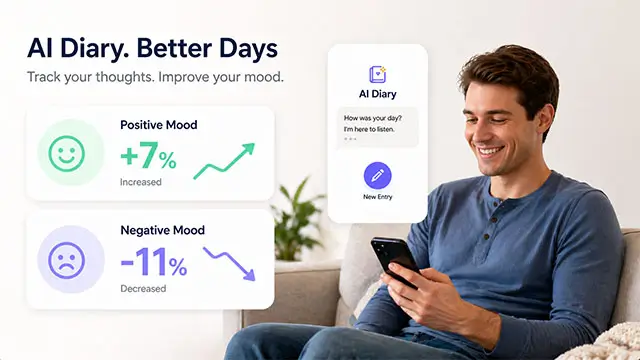
Yes. A two-week randomized controlled study from MIT Media Lab found that using an AI-powered journaling tool significantly reduced depression scores and increased daily positive affect. Another 8-week study with college students showed that AI-driven journaling enhanced positive affect by 7% and reduced negative affect by 11%, with significant decreases in anxiety and depression. Research also indicates that venting to an AI chatbot significantly reduces high-intensity negative emotions like anger and frustration.
A Simple Daily Workflow
• Morning (3 minutes): “What matters most today? Why? What’s my first step?”
• Evening (5 minutes): Voice-dump your day, then ask for summary and one insight.
• Weekly (10 minutes): “From my entries this week, extract top patterns, drains, and energizers. Suggest one small change for next week.”
Important Considerations
Protect your privacy — avoid sharing highly sensitive personal information, as AI interactions may be stored and reviewed-. Also remember that ChatGPT is not a therapist; it’s a supportive tool for self-reflection, not a replacement for professional mental health care when needed.
Final Thoughts
Using ChatGPT for journaling doesn’t replace the notebook entirely — but it adds something new: interactive depth, pattern recognition, and the gentle nudge of a question you wouldn’t have asked yourself. Try one prompt today. You might be surprised where the conversation leads.