
Where does self-driving technology stand in 2026? Explore Waymo’s robotaxi expansion, Tesla’s FSD updates, Chinese EV leadership, safety data, and new global regulations.
2026: The Turning Point for Autonomous Vehicles
After years of hype and delays, autonomous vehicles (AVs) are finally shifting from experimental testing to mainstream commercial deployment. Morgan Stanley calls 2026 the “singularity moment” for the industry, projecting that overall availability for autonomous driving in the U.S. will grow from 15% of the urban population at the end of 2025 to over 30% by year end 2026. Wood Mackenzie expects AEV operations or testing in 39 markets globally by the end of 2026. But where does self-driving tech actually stand today?
The Commercialization Explosion
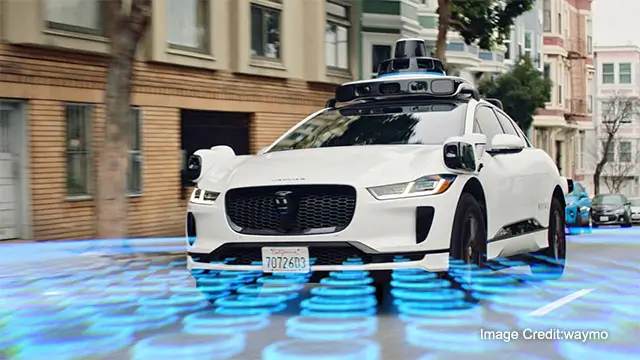
Waymo leads the pack. The Alphabet-owned company now provides over 400,000 weekly paid trips across 10 major U.S. metropolitan markets. With its sixth-generation Ojai robotaxis now deploying, Waymo aims to surpass 1 million weekly paid trips by end of 2026. Analysts project Waymo and Tesla will form a duopoly, capturing approximately 70% of U.S. autonomous driving miles by 2032.
Tesla has pushed Full Self-Driving (Supervised) v14.3.2 to its fleet, delivering unified AI models, neural network upgrades, and 20% faster reactions. Unsupervised FSD is now targeted for Q4 2026 at the earliest. However, a major setback: Tesla confirmed its HW3 vehicles cannot run unsupervised FSD, replacing promises of free upgrades with a discounted trade-in program.
Chinese Players Accelerate
China has emerged as the only market comparable to the U.S. in scale. Apollo Go, Pony.ai, and WeRide are expanding across Beijing, Shanghai, Guangzhou, Wuhan and Shenzhen. Leading automakers BYD, Geely, Isuzu, and Nissan are building Level 4-ready vehicles on NVIDIA’s DRIVE Hyperion platform, targeting deployment with Uber across 28 markets by 2028. At the 2026 Beijing Auto Show, L3 autonomous driving saw large-scale implementation, with 23 Chinese cities opening legal L3 sections on highways and clearly defining accident liability.
Safety: A Tale of Two Metrics
Safety remains the most debated aspect of autonomous driving. Waymo claims its Driver is involved in 92% fewer crashes that cause serious or fatal injuries than human drivers under comparable conditions, based on over 170 million fully autonomous miles. Yet notable incidents continue: a Waymo vehicle struck a child at low speed, and others have blocked emergency vehicles.
Tesla’s own safety data serves both sides of the argument. FSD (Supervised) reportedly averages one major collision every 5.3 million miles, significantly outperforming human drivers-. However, separate data suggests Tesla’s robotaxis crash four times more frequently than human-driven vehicles-. Public trust remains fragile; 70% of people have safety concerns about fully driverless taxis-.
The Regulatory Landscape Crystallizes
In January 2026, the UNECE adopted a draft global regulation for Automated Driving Systems, establishing uniform safety provisions for validating vehicles equipped with ADS. In the U.S., Senator Markey introduced the AV Safety Data Act to mandate NHTSA require reporting of VMT, unplanned stoppages, and injuries involving AVs-62. The SELF DRIVE Act of 2026 is also advancing, promising clear national safety standards-.
Final Thoughts
Autonomous vehicles in 2026 are no longer science fiction—they’re on our streets, carrying passengers, and logging millions of miles. But the industry is also shedding unrealistic promises. A new pragmatism has taken hold, with expectations for Level 4 scaled deployment for private cars postponed from 2030 to 2032. The winners will be those who balance rapid expansion with irrefutable safety data.