
AI is revolutionizing healthcare in 2026 — from faster disease diagnosis and AI-designed drugs to personalized medicine and virtual care. Explore current applications, safety data, and the future ahead.
The AI Healthcare Revolution Has Arrived
Artificial intelligence has moved beyond speculation in medicine. By 2026, AI is already driving diagnostics, drug discovery, tailored therapies, and continuous patient monitoring. The global AI healthcare market is now valued at roughly 29–56billion, with forecast reaching over 188 billion by 2032 — proof that the shift is happening fast. Below is how AI is transforming modern healthcare at its core.
Smarter Diagnosis: Catching Disease Before Symptoms Appear
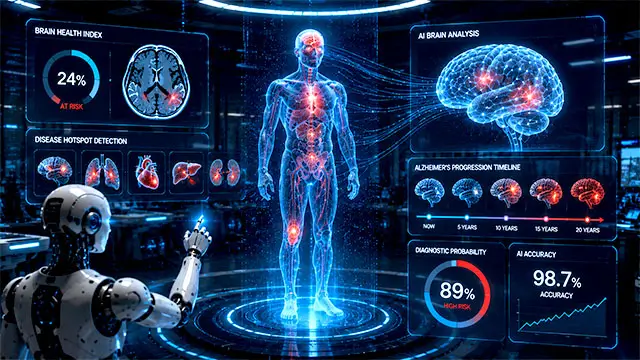
Radiology leads the AI transformation. In March 2026, Stanford researchers unveiled Merlin, a 3D AI model that reads abdominal CT scans like a radiologist. Trained on over 15,000 scans and nearly 1 million diagnosis codes, Merlin predicted correct diagnoses with over 81% accuracy and even forecasted chronic disease development up to five years in advance. On 44,000 external CT scans across multiple sites, Merlin maintained consistent, strong performance. Meanwhile, AI can now detect acute heart failure on chest CT in the emergency department, benchmarked directly against radiologist performance.
The pace of regulatory approval has also surged. The FDA recently granted 510(k) clearance to Philips’ Verida system, an AI-powered spectral CT that reconstructs 145 images per second — delivering entire exams in under 30 seconds. Similarly, the FDA cleared a head-and-neck 3D CT angiography reconstruction tool that reduces hours-long manual labor to minutes. AI-powered MRI scanners are also receiving clearance for faster, lower-cost whole-body imaging.
Accelerated Drug Discovery: 90% Phase I Success Rate
Perhaps most remarkable is AI’s impact on drug development. Industry data from early 2026 shows that drug candidates designed via generative AI are achieving a 90% success rate in Phase I safety trials — nearly doubling the historical industry average of approximately 50%. These AI platforms compress the traditional discovery-to-clinic timeline from six years to under 18 months. Using computational ADMET prediction, researchers can now eliminate reactive or toxic compounds before any physical synthesis occurs. Early 2026 has also seen AI’s first candidates entering critical Phase III trials, where they will ultimately prove their therapeutic effectiveness and safety in the real world.
Personalized Treatment: One Size Does Not Fit All
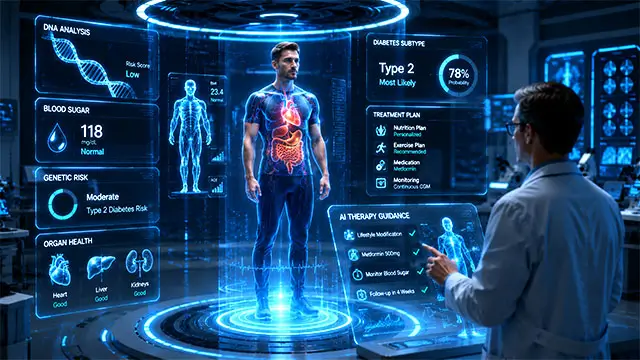
AI now enables treatment plans tailored to individual biology. In March 2026, researchers launched DiaClue — a free web tool that classifies diabetes into five distinct subtypes, enabling more personalized treatment regimens based on specific subtype risks. AI is also being integrated directly with prescription drugs and other therapies in the push toward personalized medicine-. As one expert noted, clinical AI agents now provide hyper-personalized, real-time guidance before a condition worsens-. The combination of AI and genomics is creating the prospect of truly personalized medicine across prevention, diagnosis, and treatment-.
Reinventing Patient Care: From Reactive to Proactive
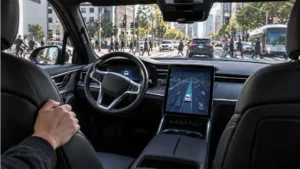
Remote patient monitoring has gone mainstream. Wearables and at-home diagnostics are quickly becoming everyday components of care, with AI increasingly supporting diagnostics, risk assessment, and administrative workflows-. The VSee Robot — the world’s first autonomous AI telehealth robot — uses LiDAR navigation to travel hospital corridors independently, connecting physicians to bedside patients instantly without staff assistance.
Advances in continuous remote monitoring now enable real-time collection of multimodal physiological data. Crucially, AI can analyze the dynamic, interdependent relationships among these parameters to detect subtle predictive trends that precede clinical decline — shifting from reactive monitoring to true anticipatory risk stratification. This approach enhances patient safety and makes home-based acute care more scalable.
The Road Ahead
Despite remarkable progress, challenges remain. AI struggles with complex tasks like generating accurate radiology reports or performing detailed organ segmentation. Additionally, widespread clinical adoption still faces hurdles in optimal implementation and regulatory approval. Nonetheless, AI in healthcare is no longer emerging — it is already reshaping how diseases are caught, drugs are made, and care is delivered. The question isn’t whether AI will revolutionize medicine, but how quickly you will experience it.