
Core Takeaway:
AI is helping companies become more efficient, but many workers now feel less secure, more exhausted, and increasingly replaceable in modern digital work culture.
The New Fear at Work Isn’t Just Losing a Job
More people are starting to notice something unsettling:
Even though work hasn’t disappeared,
they somehow feel more tired than before.
For many workers, the last thing they do before sleeping is no longer resting.
It’s checking notifications.
Replying to Slack messages.
Refreshing emails.
Opening another AI tool before bed.
Work no longer feels like something that ends.
And as AI becomes deeply embedded into daily workflows, a new kind of anxiety is quietly spreading:
“Will I still matter when AI can already do part of my job?”
AI Layoffs Are Starting to Feel Personal
Part of that anxiety comes from how frequently layoff headlines are appearing.
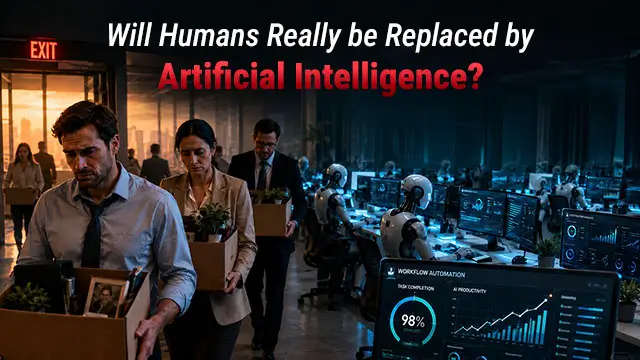
This week alone, Reuters reported that French automaker Renault is considering cutting around 800 engineering jobs in France by 2027 as companies across Europe continue restructuring operations for a more AI-driven future.
Around the same time, Reuters also reported that Oracle’s workforce shrank by roughly 13% — about 21,000 employees — during fiscal 2026, with the company continuing business restructuring partly tied to AI adoption across operations.
Meanwhile, Bloomberg reported that EV maker Lucid is cutting 18% of its U.S. staff as the company pushes deeper cost reductions amid slowing demand.
Individually, these stories sound like ordinary corporate restructuring.
But together, they create a larger emotional pattern people can feel in everyday life:
Companies are becoming more efficient.
Workers are feeling less secure.
That tension is becoming difficult to ignore.
People Online Are Talking About AI Very Differently
Traditional business headlines usually focus on:
- productivity
- restructuring
- automation
- operational efficiency
But online, especially on X, the conversation feels much more human.
One widely shared post said:
“I used to worry AI would take my job.
Now I worry they’ll take away the AI I need to do my job.”
That line spread because it captures something many workers already feel:
AI is no longer optional inside modern workplaces.
Writing emails.
Building presentations.
Summarizing meetings.
Creating content.
Analyzing spreadsheets.
Increasingly, workers are expected to use AI just to keep up.
For many people, work no longer feels like proving skill alone.
It feels like proving:
“I’m still useful in a workplace that keeps automating itself.”
Technology Keeps Improving — But People Feel More Exhausted
This is where the contradiction becomes emotionally powerful.
AI improves productivity → workers feel more burned out
Phones become smarter → attention spans become weaker
Remote work creates flexibility → people never fully log off
More digital tools → less mental rest
Many remote workers already live inside an “always online” routine.
Late-night notifications.
Weekend revisions.
Work messages during dinner.
Technology was supposed to create more freedom.
Instead, many people feel mentally trapped inside work almost all the time.
And AI is accelerating that feeling.
Because companies see:
- efficiency
- optimization
- lower costs
But workers often experience:
- anxiety
- instability
- replaceability
- pressure to constantly adapt
Younger Workers Feel This Anxiety the Most
For younger workers especially, the fear is not always unemployment itself.
It’s uncertainty.
For years, people believed:
Work hard → build stability → improve your future.
Now many are starting to question whether stability itself is disappearing.
That emotional shift is becoming part of modern digital life:
- burnout
- career anxiety
- doomscrolling
- productivity obsession
- fear of falling behind
And unlike older technological revolutions, AI affects not only physical labor.
It also touches:
- communication
- creativity
- writing
- analysis
- decision-making
For the first time, many knowledge workers feel vulnerable too.
This Is Bigger Than Silicon Valley
This anxiety is spreading far beyond tech hubs in the United States.
In countries like South Africa, Indonesia, Philippines, and Mexico, many workers are already dealing with:
- rising living costs
- unstable wages
- global competition
- digital work pressure
AI feels both exciting and threatening at the same time.
It promises opportunity.
But it also creates a constant fear of becoming outdated.
Maybe the Biggest Question Isn’t About AI
AI will almost certainly create new industries and new types of jobs.
History suggests technological revolutions always do.
But many people no longer experience AI as just a technology story.
It feels personal.
Maybe the real question is no longer:
“Will AI replace jobs?”
Maybe it is:
“What happens to human value when efficiency becomes the most important thing in the economy?”