

Core Takeaway: In 2026, global high-net-worth investors are aggressively cutting their U.S. dollar exposure. To protect personal savings from long-term purchasing power erosion, everyday savers must adopt institutional strategies—diversifying into gold, high-yield cash alternatives, and international ETFs.
According to the latest UBS Global Family Office Report 2026, the world’s wealthiest families are pivoting away from USD-denominated assets. This capital flight is largely fueled by concerns over the U.S. national debt, which recently breached a staggering $36 trillion threshold, alongside shifting global macroeconomic alliances.
When I first stared at these numbers, a simple but urgent question hit me: In 2026, am I leaving too much of my hard-earned savings exposed to a depreciating dollar?
This concern isn’t just paranoia; it is backed by cold, hard data. The World Bank’s Global Economic Prospects recently highlighted that persistent long-term inflationary pressures are quietly eroding the purchasing power of cash-heavy savers. Furthermore, recent policy briefs from the Federal Reserve suggest that macroeconomic volatility is becoming the new baseline.
While I am not advocating for a panic-induced sell-off of every greenback you own, we cannot afford to ignore the playbook of the ultra-wealthy. It is time to look at asset diversification not as a luxury, but as a survival mechanism for 2026.
Here is exactly where the world’s smartest money is moving right now, and the actionable steps you can take to shield your own savings from the fallout.
What Does This Mean for My Money?
When I saw reports that wealthy investors and family offices are reducing their exposure to the U.S. dollar, my first thought was simple:
Am I leaving too much money exposed to dollar weakness in 2026?
According to a new UBS survey, many of the world’s richest families are moving money into international assets, gold, and alternative investments as concerns grow over rising U.S. debt and geopolitical tensions.
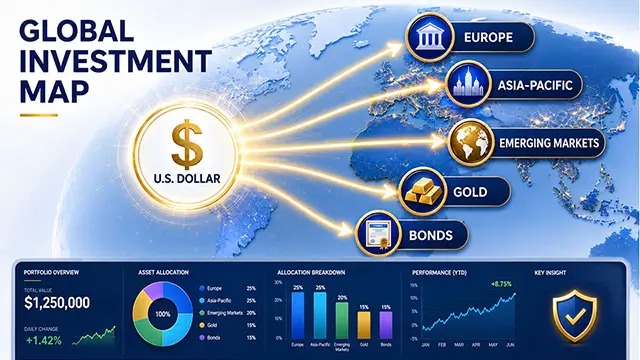
That matters because if the dollar weakens over time, ordinary savers could quietly lose purchasing power through inflation, rising import costs, and lower real returns on cash savings.
I’m not panic-selling my dollar assets. But I am thinking more seriously about diversification before bigger market shifts happen.
What Happened?
UBS reported that wealthy investors globally are trimming U.S. dollar exposure as they rethink portfolio risk in 2026.
The main concerns include:
- America’s growing national debt, now above $36 trillion
- Higher long-term inflation risks
- Global geopolitical uncertainty
- Concerns that U.S. assets may become overvalued
Instead of holding too much cash in dollars, many wealthy families are shifting toward:
- Gold
- International stocks
- Real estate
- Infrastructure assets
- Alternative investments
This does not mean the dollar will suddenly collapse. But it signals that major investors are preparing for more volatility and slower long-term dollar strength.
What It Means for My Savings
Cash Savings Could Lose Value Slowly
If inflation stays elevated while the dollar weakens, money sitting in traditional savings accounts may lose purchasing power over time.
That means:
- Grocery prices could remain high
- Imported electronics may become more expensive
- International travel could cost more
- Everyday living expenses may rise faster than savings interest
Keeping too much idle cash could become a hidden financial risk.
My Investments May Need More Diversification
For years, many investors relied heavily on:
- U.S. tech stocks
- Dollar-denominated assets
- Domestic index funds
But if global markets start outperforming or the dollar weakens, portfolios concentrated only in U.S. assets may underperform.
That is why some investors are now exploring:
- International ETFs
- Gold ETFs
- Dividend-paying stocks
- Treasury bills
- Multi-currency exposure
Profit vs Risk Breakdown
Potential Upside
Gold and Hard Assets Could Benefit
Gold often performs well during periods of inflation fears and currency uncertainty.
International Stocks May Offer Better Value
Some overseas markets currently trade at lower valuations than major U.S. stocks.
Diversification Can Reduce Risk
Spreading investments across different regions and asset types may help protect long-term wealth.
Possible Risks
The Dollar Could Stay Strong
The U.S. dollar is still the world’s dominant reserve currency. Betting too aggressively against it could backfire.
International Markets Are Volatile
Foreign investments can carry:
- Currency risk
- Political instability
- Slower economic growth
Emotional Investing Can Hurt Returns
Making sudden portfolio changes based on headlines alone may create unnecessary losses or taxes.
Better Alternatives to Leaving Cash Idle
1. High-Yield Savings Accounts
Many online banks still offer significantly higher interest rates than traditional savings accounts.
Best for:
- Emergency funds
- Short-term savings
- Lower-risk investors
2. Treasury Bills and Fixed Deposits
Treasury bills and fixed deposits may provide:
- Stable returns
- Lower volatility
- Better income than standard checking accounts
These are useful for conservative savers who want predictable returns.
3. Gold ETFs
Gold ETFs offer easier access to gold investing without buying physical metals.
They may help hedge against:
- Inflation
- Currency weakness
- Market uncertainty
4. International ETFs
Global ETFs allow investors to diversify beyond the U.S. market.
Instead of relying entirely on American stocks, investors can gain exposure to:
- Europe
- Asia
- Emerging markets
This can reduce concentration risk over time.
Should I Take Action?
I Would Consider Diversifying If:
- Most of my savings are in U.S. dollars
- My investments are heavily concentrated in U.S. stocks
- I’m worried about inflation and debt risks
- I have long-term financial goals
I Would Stay More Conservative If:
- I need cash within the next 1–2 years
- I cannot tolerate market swings
- I already own diversified investments
- I prioritize stability over growth
What I’m Personally Watching in 2026
Before making major financial decisions, I’m paying attention to:
- U.S. inflation trends
- Federal Reserve interest rate decisions
- Treasury yields
- Gold prices
- Dollar strength versus other currencies
These indicators could shape how markets perform over the next year.
Action Steps Before Moving Your Money
Start comparing now
Review:
- High-yield savings rates
- Treasury bill yields
- Gold ETF fees
- International ETF performance
Don’t leave money idle
Inflation can quietly reduce the value of cash over time.
Review your portfolio exposure
Check how much of your wealth depends entirely on:
- The U.S. dollar
- U.S. stocks
- Domestic economic growth
Explore better options carefully
Diversification is about reducing risk — not abandoning the dollar completely.
FAQs
Should I reduce my U.S. dollar exposure in 2026?
It depends on your financial goals and risk tolerance. Many experts recommend diversification rather than moving entirely away from dollar assets.
Is gold a good hedge against dollar weakness?
Gold has historically been used as a hedge during inflation and currency uncertainty, though prices can still fluctuate significantly.
Are international ETFs safer than U.S. stocks?
Not always. They help diversify portfolios but also introduce foreign market and currency risks.
What is the safest place for cash right now?
High-yield savings accounts, Treasury bills, and fixed deposits are generally considered lower-risk options.
Why are wealthy investors diversifying globally?
Many are concerned about rising U.S. debt, inflation pressure, and long-term currency stability.
Disclaimer
This article is for informational purposes only and does not constitute financial or investment advice. Investments involve risk, including possible loss of principal. Always research carefully and consult a licensed financial advisor before making financial decisions.