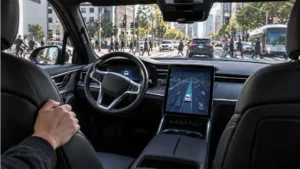

Core Takeaway: Modern vehicles are transforming from hardware dominated machines into software defined platforms, much like smartphones evolved from calling devices into app driven ecosystems. Over the air updates, centralized computing, and digital cockpits are redefining how cars are built, sold, and experienced. This shift promises continuous improvements, personalized experiences, and new revenue streams, but it also raises challenges in cybersecurity, safety, and data privacy.
What Is a Software Defined Vehicle?
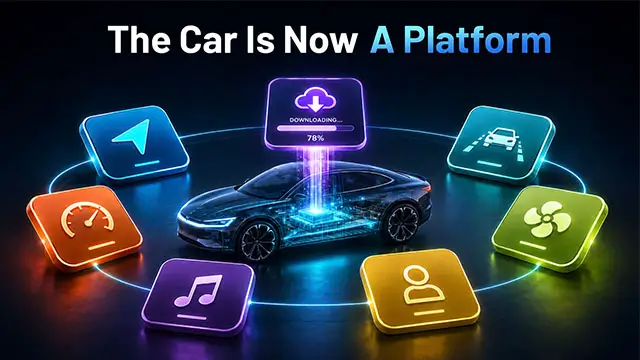
A software defined vehicle (SDV) is a car whose core functions and features are controlled by software rather than fixed hardware. In a traditional car, adding a new feature often required a physical upgrade or a visit to the dealership. An SDV can receive new capabilities—improved range, enhanced driver assistance, refreshed infotainment—through over the air (OTA) updates, just like a smartphone.
This transformation is enabled by a shift from dozens of separate electronic control units (ECUs) to a centralized, high-performance computing architecture. Instead of having hundreds of small chips each handling a single function, an SDV uses a few powerful domain controllers that run on unified software. This simplifies the vehicle’s electronic structure, reduces wiring, and makes it easier to update.
The Rise of OTA Updates and Continuous Improvement
OTA updates are the hallmark of the software defined vehicle. Tesla pioneered this model, pushing updates that improved acceleration, braking distance, and even added entire features like “Dog Mode” years after a car was sold. Legacy automakers are now following suit. Ford’s BlueCruise hands free driving system received an OTA update to version 1.3 in 2024, enhancing lane change performance and highway coverage.
According to a report by McKinsey, software and electronics will account for over 50% of a vehicle’s value by 2030, up from roughly 20% in 2020. This shift unlocks a new economic model: automakers can generate revenue long after the initial sale through subscription-based features, on demand upgrades, and digital services.
The Digital Cockpit and Personalized Experience
Inside an SDV, the cabin becomes a personalized digital environment. Driver profiles stored in the cloud adjust seats, mirrors, climate, and entertainment preferences automatically. Voice assistants powered by generative AI—such as Mercedes Benz’s integration of ChatGPT—enable natural conversations for navigation, vehicle controls, and general queries. Passengers can stream media, play games, or hold video conferences on large, high-resolution displays.
This smartphone like experience is already reshaping how consumers choose vehicles. A 2023 J.D. Power study found that infotainment system satisfaction is now a critical factor in overall vehicle ownership satisfaction, especially among younger buyers who expect a seamless digital experience.
Challenges: Cybersecurity, Safety, and Trust
Turning a car into a connected digital device introduces serious risks. A software defined vehicle opens dozens of potential attack surfaces, from Bluetooth and Wi Fi modules to the OTA update mechanism itself. The United Nations Economic Commission for Europe (UNECE) has introduced WP.29 regulations requiring automakers to implement cybersecurity management systems and software update processes.
A software bug in a smartphone is an inconvenience; in a car traveling at highway speed, it can be catastrophic. This elevates the importance of software quality, redundancy, and validation to unprecedented levels.
Conclusion
The software defined vehicle represents the most significant architectural shift in the automotive industry since the assembly line. Cars are no longer static products but evolving platforms that improve over time. While the transformation brings enormous potential for convenience, personalization, and new business models, it also demands that automakers master disciplines far beyond mechanical engineering—becoming experts in cybersecurity, data privacy, and continuous software delivery. The car has become a smartphone on wheels, and like the smartphone revolution, this change is irreversible.