

Core Takeaway: Virtual and augmented reality have moved far beyond gaming, now reshaping how we collaborate at work, perform surgery, train medical professionals, and teach students. In the workplace, platforms like Microsoft Mesh enable persistent virtual offices while AR headsets such as HoloLens guide frontline technicians; in medicine, Johns Hopkins surgeons have used AR for “X‑ray vision” during spinal procedures, and FDA‑cleared VR therapies like AppliedVR deliver risk‑free pain management and training; in education, Google Expeditions and interactive 3D models turn abstract concepts into tangible experiences. As hardware from Apple, Meta, and others becomes lighter and more affordable, these tools are maturing into a foundational layer for learning, healing, and building.
Redefining the Workplace
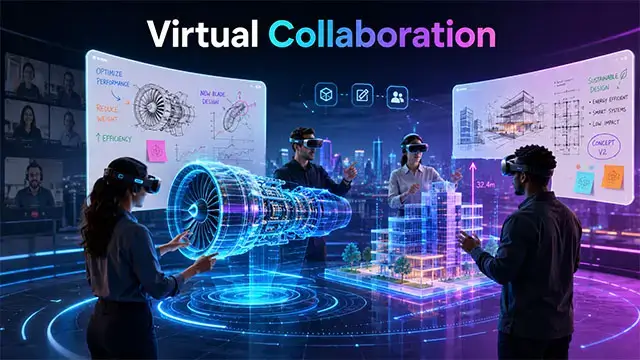
Virtual collaboration
VR and AR replace video call grids with persistent virtual offices where distributed teams manipulate life size 3D models and brainstorm on infinite whiteboards. Platforms like Microsoft Mesh and Meta’s Horizon Workrooms let engineers inspect digital twins of jet engines or buildings together, catching flaws invisible on flat screens.
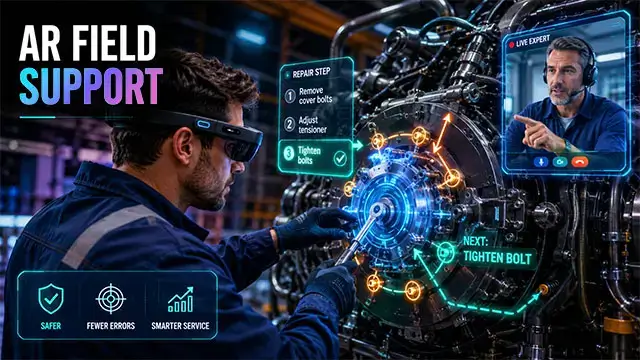
Frontline and field support
AR smart glasses overlay step by step instructions directly onto machinery. A technician sees exactly which bolt to turn next while a remote expert watches through their camera and guides them in real time. The result: faster onboarding, fewer errors, and safer operations across manufacturing, logistics, and field service.
Operating Rooms and Therapy Sessions
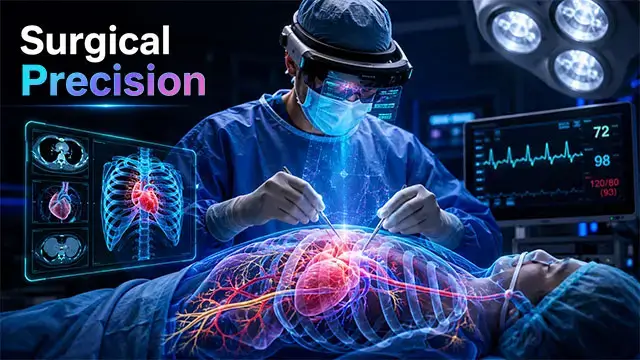
Surgical precision
Surgeons at leading hospitals wear AR headsets that project CT scans and 3D models onto the patient’s body, creating “X ray vision” to navigate around critical nerves and blood vessels. This shortens surgeries and improves outcomes.
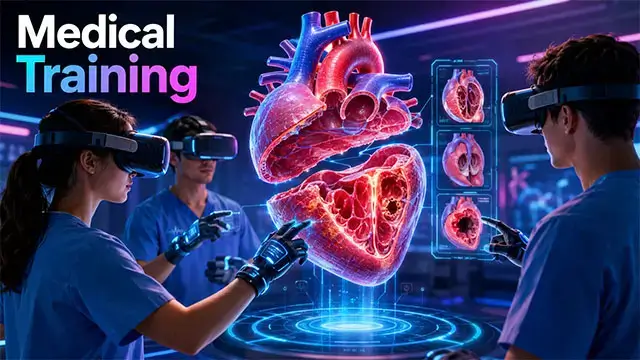
Medical training
Students practice procedures repeatedly in VR simulations that replicate real tissue tactile feedback. They can dissect a virtual heart layer by layer, understand defects from the inside, and make mistakes without risk.
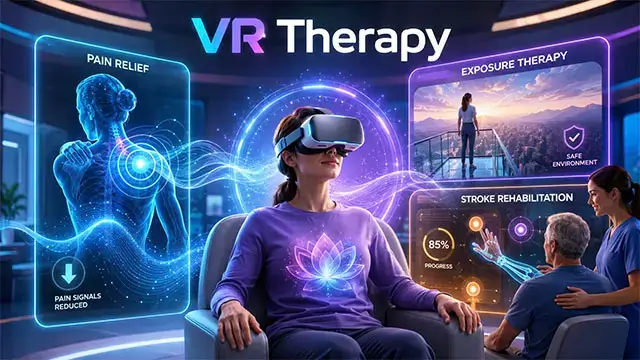
Therapeutic applications
VR therapy effectively manages pain, treats phobias through controlled exposure, and helps stroke patients regain motor skills through gamified rehabilitation exercises.
The Classroom Without Walls
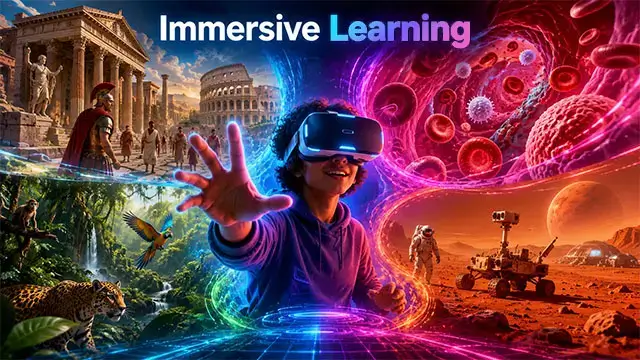
Immersive learning
History students walk through reconstructed ancient Rome; biology students travel through the bloodstream; geography lessons become virtual field trips to the Amazon rainforest or Mars—all accessible with a headset.
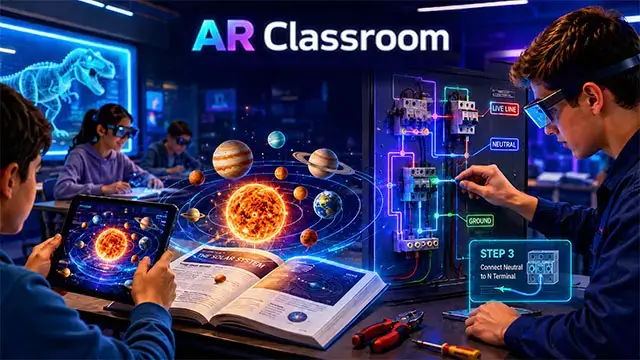
AR in the physical classroom
Point a tablet at a textbook diagram and a 3D solar system springs to life. Vocational trainees, like aspiring electricians, can wire circuits in AR before touching real wires, building competence safely. These tools engage visual and kinesthetic learners, making education more inclusive.
The Road Ahead
Hurdles remain: headset cost, motion sickness for some users, and the need for compelling content. However, as hardware becomes lighter, more affordable, and wireless, and as AI accelerates the creation of realistic virtual environments, adoption across work, medicine, and education will only grow. What began as a gaming novelty is maturing into an essential technology layer for how we learn, heal, and build together.