

Core Takeaway: Wearable devices have evolved from simple pedometers to sophisticated health monitors that continuously track heart rhythm, blood oxygen, sleep patterns, and more. This transforms our bodies into real time data platforms, enabling earlier disease detection and personalized health insights. However, this constant stream of intimate physiological data also raises urgent questions about privacy, security, and who ultimately controls the information our bodies generate.
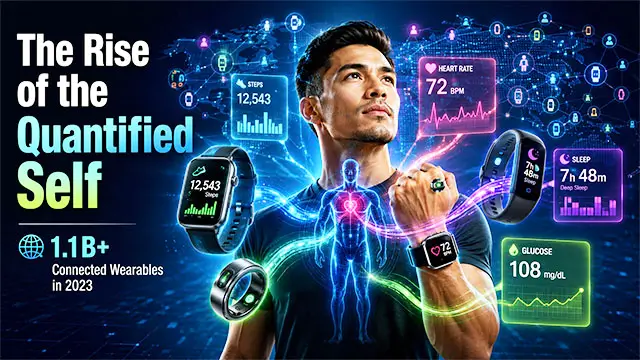
The Rise of the Quantified Self
The concept of the “quantified self” has moved from niche tech circles into the mainstream. According to Statista, the number of connected wearable devices worldwide surpassed 1.1 billion in 2023, a figure projected to climb further as smartwatches, fitness bands, and smart rings proliferate. What began with counting steps has expanded into a full spectrum digital mirror of our physiology. Each heartbeat logged, each sleep cycle analyzed, and each blood glucose reading recorded constitutes a new layer of data that, aggregated over time, paints an intimate portrait of our health.
From Wellness to Medical Grade Monitoring
Wearables now cross the boundary from lifestyle gadgets into regulated medical tools. The Apple Watch’s electrocardiogram (ECG) feature received FDA clearance for detecting atrial fibrillation, and the landmark Apple Heart Study, published in the New England Journal of Medicine in 2019, enrolled over 400,000 participants to demonstrate that a wearable could identify irregular heart rhythms at scale. Similarly, continuous glucose monitors (CGMs) from companies like Dexcom and Abbott are no longer limited to diabetes patients; they are increasingly marketed to health conscious consumers seeking real time metabolic feedback.
Research from the Scripps Research Translational Institute has shown that wearable data—resting heart rate, sleep, and step counts—can predict the onset of viral infections like influenza and COVID 19 before symptoms appear. This shift toward predictive, preventative monitoring is what truly turns the body into a data platform: one that doesn’t just record the past but warns about the future.
The Data Goldmine and Its Insights
When aggregated and analyzed with artificial intelligence, wearable data can reveal correlations invisible to the naked eye. A study published in Nature Medicine in 2022 used Fitbit data to develop algorithms that detect early signs of hypertension and sleep apnea. Insurance companies and corporate wellness programs are already leveraging aggregated wearable data to adjust premiums or offer incentives, creating a new economy around personal health metrics.
Yet this data is only as valuable as it is accessible. Healthcare providers rarely have the infrastructure to integrate a patient’s continuous wearable data into clinical decision making. Startups and major tech companies are racing to bridge this gap, building platforms that translate consumer generated data into clinically actionable insights.
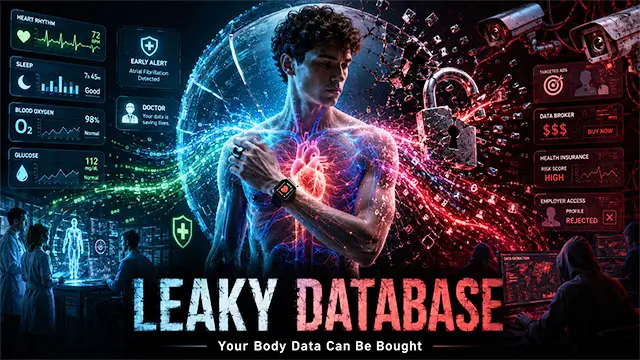
Privacy: The Body as a Leaky Database
The same data that can save lives can also be exploited. Unlike medical records protected by HIPAA in the United States, most wearable data is not covered by federal health privacy laws. A 2020 report by the nonprofit Privacy International highlighted how fertility tracking apps and wearables shared sensitive intimate data with third party advertisers. The Federal Trade Commission has also cracked down on health app data sharing practices, signaling growing regulatory concern.
Once your heartbeat pattern, sleep quality, or glucose levels leave your device, they can be bought, sold, or stolen. Unlike a credit card, you cannot change your biological signature. This permanence makes the stakes of wearable data privacy uniquely high.
The Road Ahead: Always On, Always You
Wearables will only become more pervasive. Prototypes for smart contact lenses that measure glucose from tears, patches that analyze sweat for metabolic markers, and e textiles that monitor muscle activity are all in development. Gartner predicts that by 2027, more than 40% of healthcare organizations will use data from consumer wearables as part of their clinical processes.
The digital human is no longer a futuristic concept. Our bodies are already streaming, generating continuous data flows that extend far beyond the hospital and into our pockets, our beds, and our daily lives. The challenge now is to build a governance framework that matches the sensitivity of the data, ensuring that our bodies remain our own, even as they become platforms.